Getting it Right: When Information is Wrong
Or, How a Hamilton Hall Bit of Misinformation Drove Me Crazy

I was a librarian at the University of the Arts in Philadelphia from 1987-2020. Although I’d never been trained in archives, I was put in charge of managing the institutional archives and answering historical questions about alumni, former faculty, the buildings, and anything else related to the school’s history (I did learn about archives, but thank goodness for the two bona fide archivists we had). I’d answer the question and I’d always say where I’d found the answer, because 1., you’ve got to cite your source, and 2., it’s likely someone else would ask the same question. If the questioner had then written a book or a newspaper article, I’d often see a bit of misinformation even though I knew I’d provided the correct information. Why does this happen? We’re human (I’ve been known to be wrong). Journalists are under deadlines. And granted, all those name changes and mergers are difficult to track - unless I gave you the web page I wrote about it, but still.
So what’s the big deal? Why does it matter? It matters because someone will cite that source containing the misinformation. The misinformation gets repeated, and each repetition reinforces the misinformation until it seems like the wrong information is the right information, and you have to be really determined to track down the correct information (dogged determination is one of my attributes).
Case in point: a February 6, 2025, article in the Philadelphia Inquirer by Susan Snyder and Jake Blumgart stated
“Hamilton [Hall] and Furness were given to UArts for $1 in 1994, city records show.” [this is wrong]
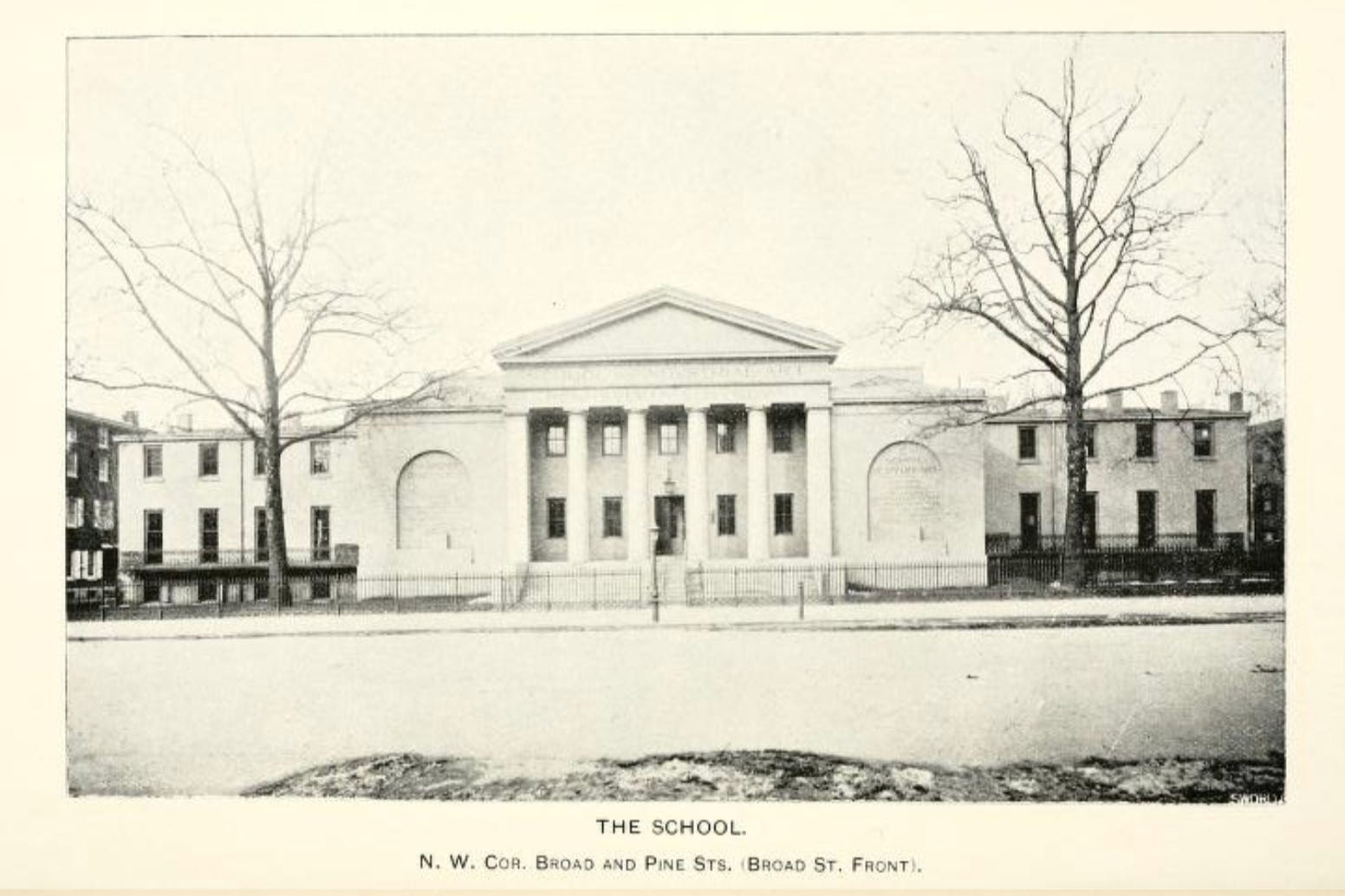
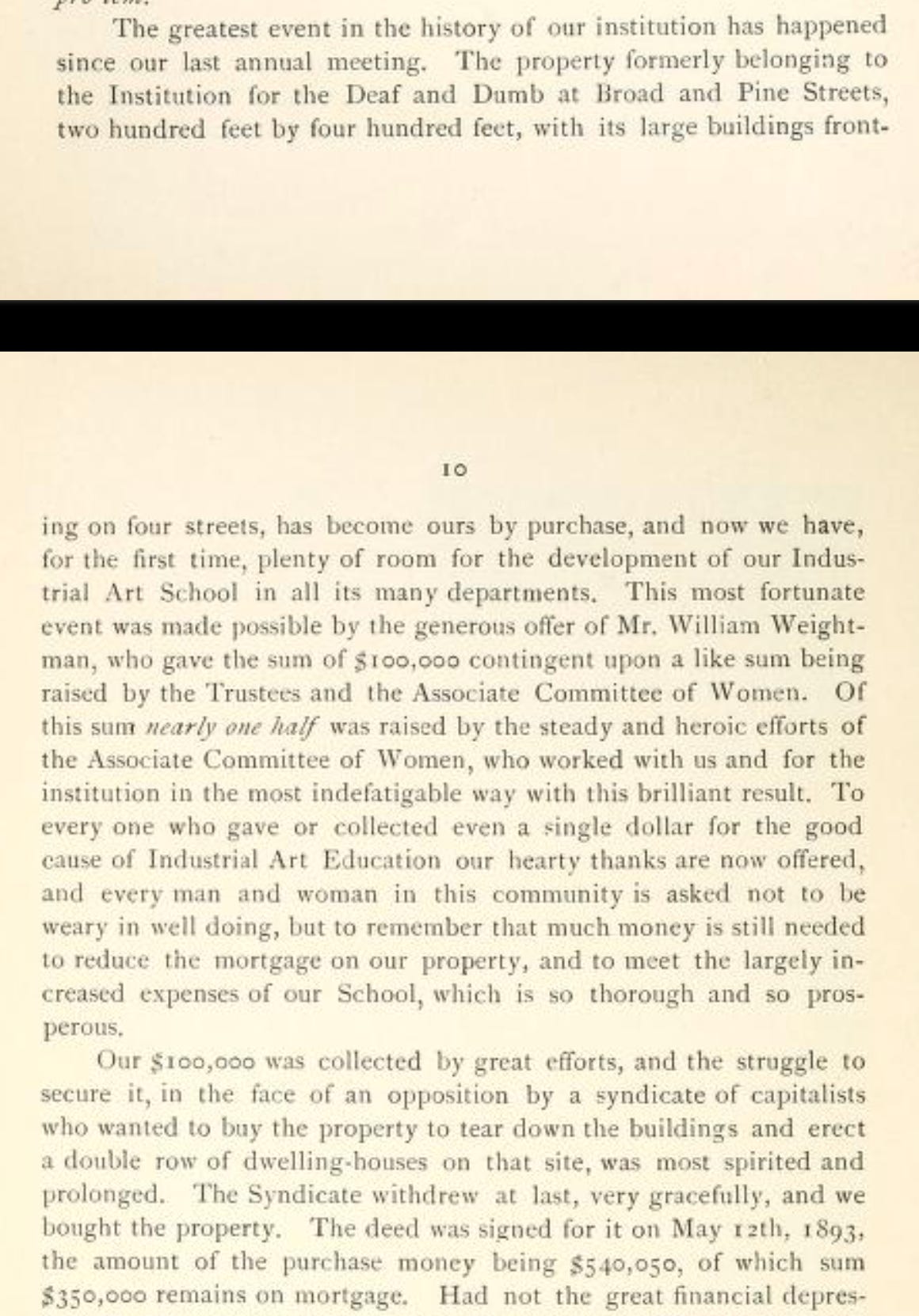
What!! The City of Philadelphia never gave UArts a building for a dollar. The Pennsylvania Museum School of Industrial Art (PMSIA, founded 1876), the original name of the UArts art school, purchased what I now think of as the John Haviland/Frank Furness complex at 320 South Broad Street in 1893 from the Pennsylvania Institution for the Deaf and Dumb (today’s Pennsylvania School for the Deaf). As a matter of fact, according to the PMSIA annual report for 1893 pictured below, it was considered “the greatest event” thus far in PMSIA’s history.
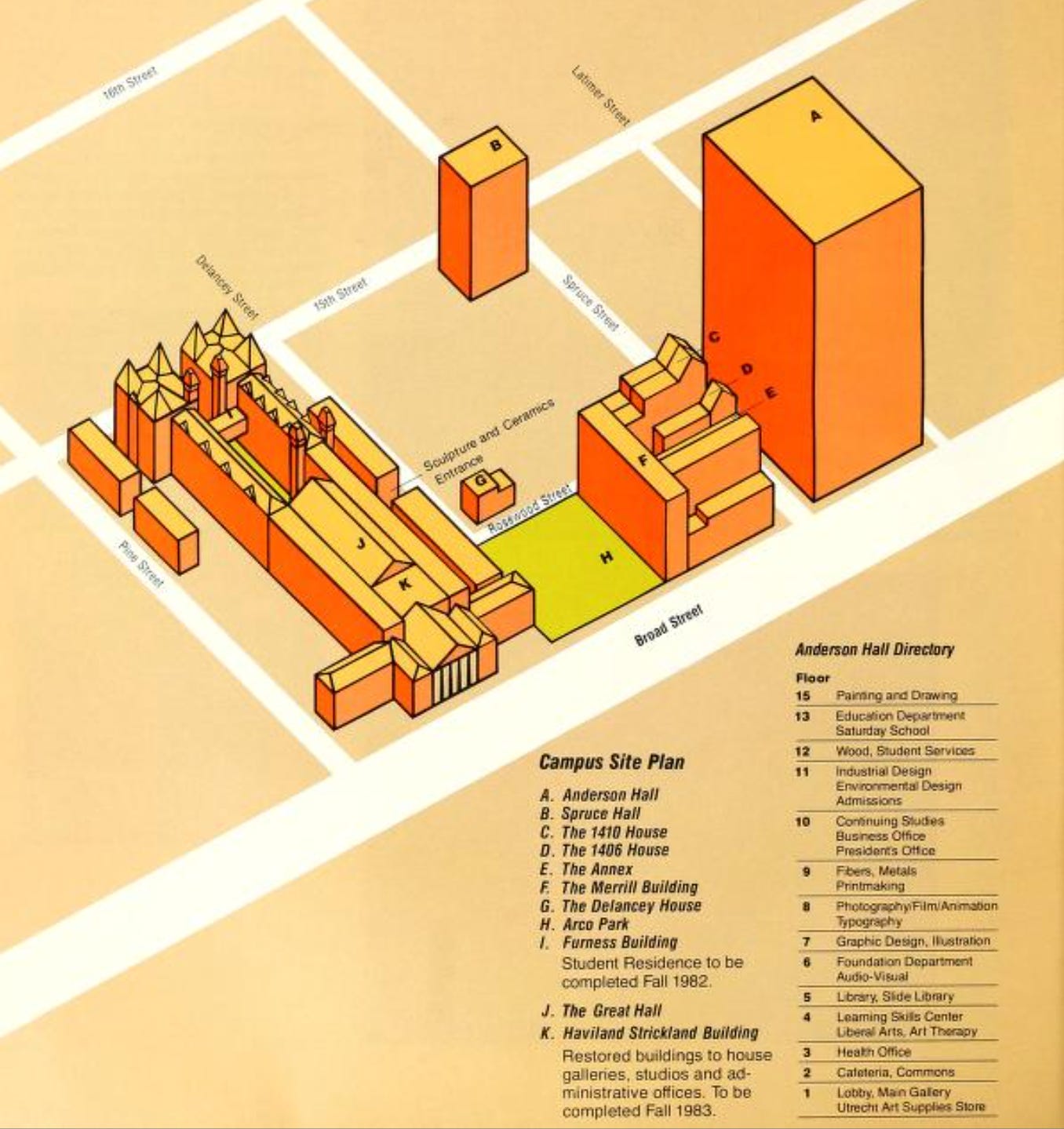
So why did someone think those buildings were a gift from the City? Someone misinterpreted a 1994 confirmation deed to specify lot lines, registered with the City of Philadelphia. The deed was from the University to itself. I don’t know why this was done, but my guess would be that perhaps it was connected to the Philadelphia Orchestra’s 1988 purchase of the ARCO Park lot just north of the Haviland/Furness building. The ARCO Park site would eventually be covered over by the Kimmel Center.
The moral of this story: verify your facts before you put them in writing. Otherwise you’ll have to be like me and write about That Time I Was Wrong.
— Sara MacDonald, author. A UArts librarian, 1987-2020.